

Itch from PFIC is more than normal itching
If you or your loved one experiences itching from PFIC, you know that it can be a challenge to deal with. It may be frequent, deep, and frustrating.
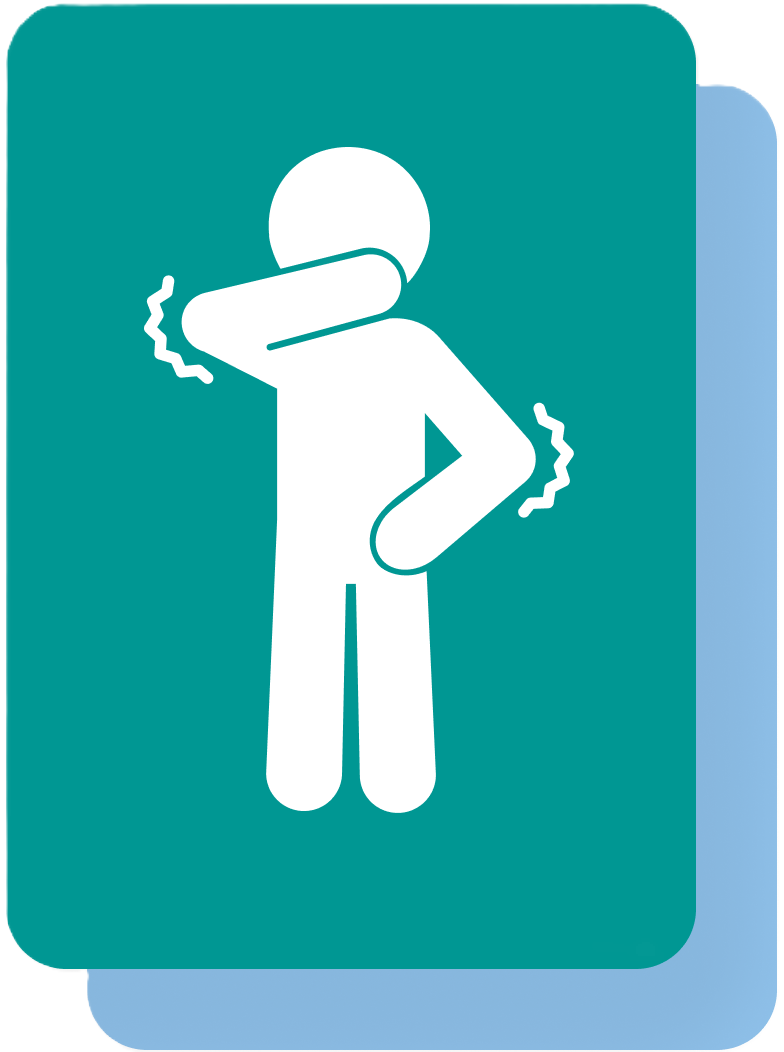

More than 75% of people with PFIC experience itch
Your doctor may describe itch using this term. Pruritus (pronounced proo-rye-tuhs) is a medical term for itching.
How PFIC affects the liver
- Bile acids don’t drain properly out of the liver to the small intestine.
- Buildup of bile acids in the liver can lead to liver injury.
- Excess bile acids spill into the bloodstream.
The buildup of bile acids in the liver and the bloodstream may be the cause of itch (cholestatic pruritus) in PFIC.
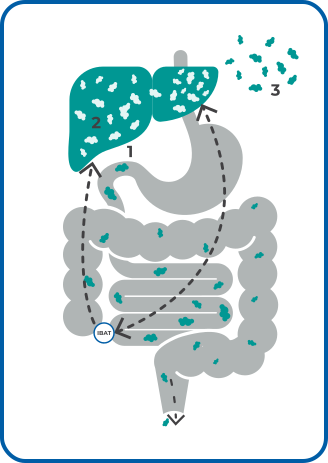
The buildup of bile acids in the liver and the bloodstream may be the cause of itch (cholestatic pruritus) in PFIC.
Bile acids are created in the liver. Bile acids aid in digestion, breaking down food and helping the body absorb fat-soluble vitamins.
The ileal bile acid transporter, or IBAT, recycles bile acids back into the liver from the intestines.
Signs of itch aren’t always obvious
Babies and young kids may

Rub themselves or rub against objects
Kick their legs and be restless
Cry, be irritable and fussy
Struggle to fall and stay asleep
Older kids and adults may

Feel embarrassed or be impacted socially
Feel effects on mood
Struggle to concentrate
Struggle to fall and stay asleep
Make sure to talk to your doctor about all the ways itch impacts you or your child

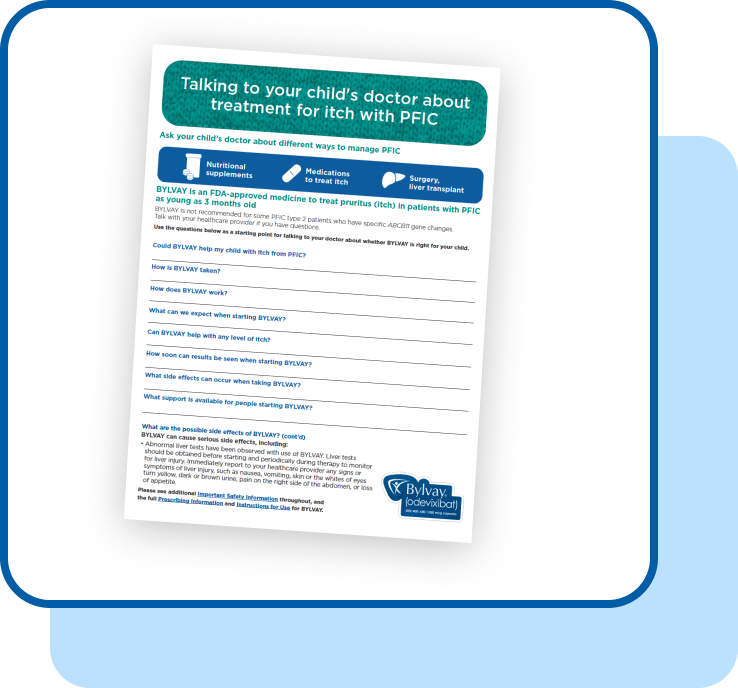
It’s important to talk to your doctor about the potential impact of itch
Disruptions due to the itch from PFIC affect each patient and caregiver differently.
Use the doctor discussion guide to track symptoms and have better conversations about the impact of PFIC with your doctor.
Use the doctor discussion guide to track symptoms and have
better conversations about the impact of PFIC with your doctor.
Get started tracking your symptoms with the itch tracker and
itch-related sleep tracker and share the results with your doctor.
Download